Transforming
Potential Into

Sustainable
Value
Sustainability Report 2026

Message from Group Managing Director and Chief Executive
Dear Stakeholders,
From tariff wars and the wars in the Middle East to supply chain disruptions, energy security, and extreme climate change, these VUCA (Volatility, Uncertainty, Complexity and Ambiguity) challenges encapsulate the current multipolar world order. In the midst of all these, the sustainability agenda seems to have been sidelined. However, at IOI, we believe in our theme for this year’s Sustainability Report - “Transforming Potential into Sustainable Value”. In pursuing our mission to achieve responsible and sustainable commercial success, we have been resilient and growing against these VUCA challenges.
Dato’ Lee Yeow Chor
Group Managing Director and Chief Executive
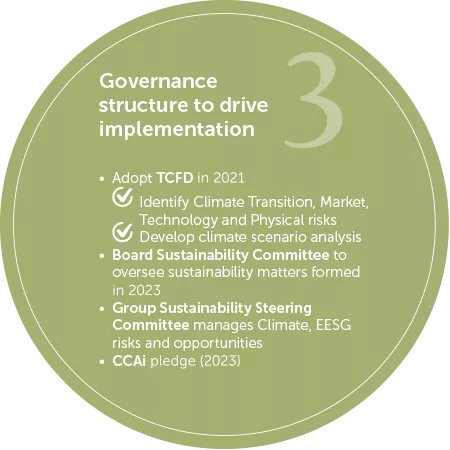
During FY2026, 1.63 million MT CO2e were sequestered by our oil palm trees and forested conservation areas, as verified under RSPO PalmGHG methodology. This verification has given us a strong impetus as we pursue our next target of achieving carbon neutrality in our Scope 1 and Scope 2 GHG emissions by the year 2030.
Our operations generated
of by-products, including 3,683,249 MT of biomass from our plantations during FY2026.
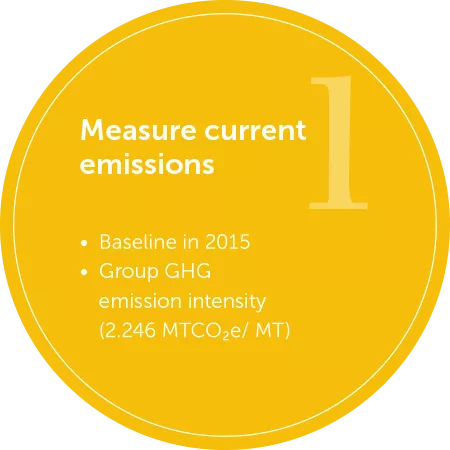
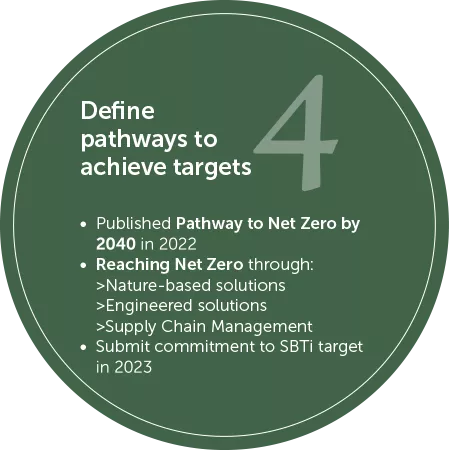
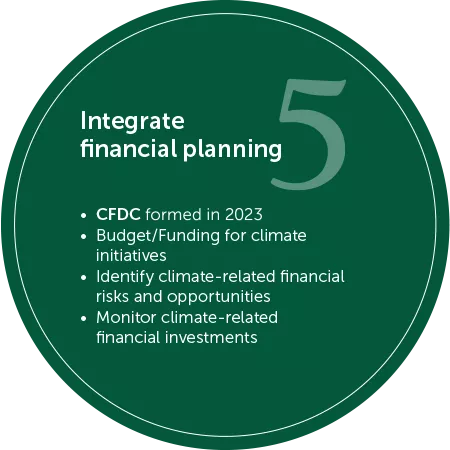
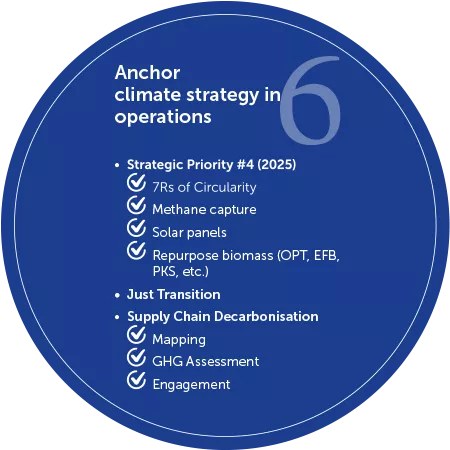
CLIMATE TRANSITION PLAN
2015
GHG emissions baseline
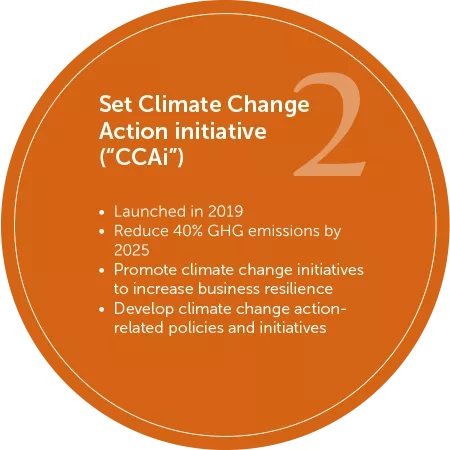
2019
Formed CCAi
2022
Set Net Zero by 2040
2025
Short term target achieved:
46% GHG intensity reduction
2030
Carbon Neutral: Scope 1 and 2
2040
Net Zero: Scope 1, 2 and 3
IOI’s List of Material Matters
E
Economic
- Data Integrity and Auditability via Digitalisation
- Sustainability Certifications
- Supply Chain Management
- Data Privacy and Cybersecurity
- Energy Management and Operational Eco-Efficiency
- Palm Biotechnology and Product Innovation
- Productivity and Product Quality
- Traceability and Responsible Sourcing
S
Social
- Safety and Health
- Human Rights and Fair Labour Practices
- Ethical Recruitment and Responsible Employment
- Diversity, Inclusivity and Equal Opportunity
- Community Engagement and Social Responsibility
- Child Rights and No Child Labour
- Gender Equality and Women Empowerment
- Talent Management


E
Environmental
- Climate Change, GHG Emissions Management, including Low Carbon Technology
- Sustainable Land Use and No Deforestation
- Biodiversity and Ecosystems
- Water Management
- Agrochemical Management
- Regenerative and Precision Agriculture
- Circular Economy and Waste Management
- Fire Management
G
Governance
- Grievance Mechanism and Transparent Communication
- Regulatory and Third-Party Compliance
- Anti-Bribery and Anti-Corruption
- Business Ethics and Code of Conduct
TRANSFORMING CLIMATE ACTION INTO RESILIENT VALUE
Accelerating Sustainable Solutions
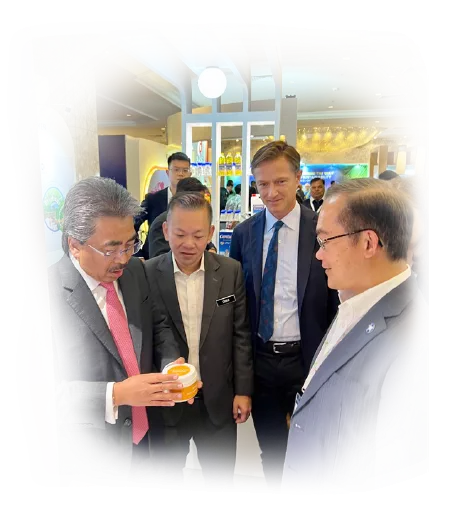
Every strategic step taken by IOI today is about shaping a lower carbon tomorrow. Guided by innovation and technology, a sense of responsibility, and Net Zero commitment, IOI Corporation Berhad continues to accelerate its Sustainability and Climate initiatives while generating lasting benefits for our stakeholders and the environment.
TRANSFORMING NATURAL CAPITAL INTO RESOURCE VALUE
The Journey Begins With Nature
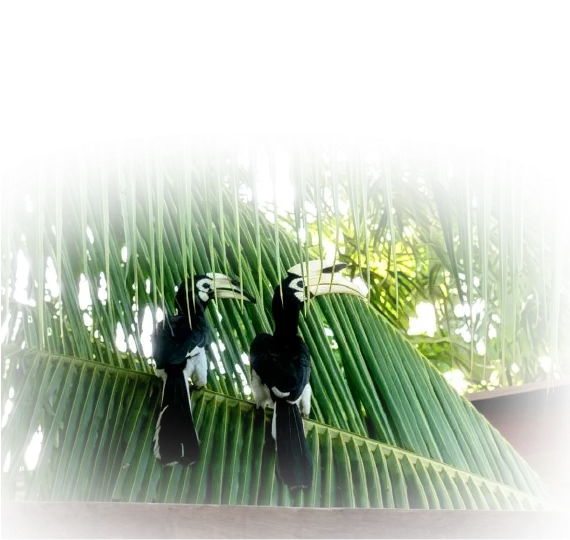
Protecting biodiversity and ecosystems are essential to sustaining a healthier and more resilient future. Through ecological stewardship, responsible water and fire management, conservation initiatives, and regenerative agronomy, IOI Corporation Berhad remains committed to preserving natural ecosystems while creating long-term value for communities, wildlife, and our future generation.
TRANSFORMING HUMAN AND SOCIAL CAPITAL INTO SHARED PROSPERITY
Empowering Shared Value
Building a sustainable future begins with empowering people and embracing diverse perspectives. Through a culture rooted in respect, inclusivity and equal opportunity, IOI Corporation Berhad continues to foster meaningful connections and build a lasting legacy where individuals and communities can grow, contribute and thrive together for an even better tomorrow.
Flagships on
5 Impactful
Case Studies
Flagships on
5 Impactful Case Studies
South Ketapang Landscape Project
Stakeholders and Scope
- PT SNA.
- IDH (collaboration partner), with field implementation started January 2025.
- Local communities within five-kilometre radius: Air Hitam Hulu, Air Hitam Besar, Pembedilan Villages.
- Independent smallholders (Good Agricultural Practices (‘GAP’) training, Surat Tanda Daftar Budi Daya (“STDB”) registration).
Challenge(s)
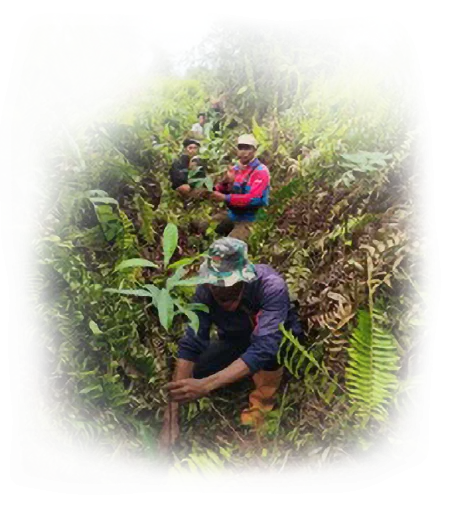
- Protecting HCV/HCS areas from encroachment and reducing pressure on natural resources.
- Limited community livelihood opportunities.
- Smallholder land legality, traceability and sustainable cultivation gaps.
- Wildfires.
Value Created (Impact)
- 7,344.27 Ha covered within and around the concession, including 412.25 Ha HCV area.
- 199.6 Ha of rehabilitation and conservation actively managed.
- Community silvopasture expanded from 5 Ha to 13 Ha. While 4 Ha of community rice cultivation was established to support local livelihood and reduce deforestation and fire risk.
- Enhancing the Online Hotspot Monitoring Platform for landscape- level fire prevention.
- Good Agricultural Practices training and Surat Tanda Daftar Budidaya registration support extended to independent smallholders.
- Capacity building provided on HCV management, GIS and fire prevention.
- No wildfires impacted biodiversity habitats and biodiversity corridors.
Bukit Leelau Mini Landscape Project
Stakeholders and Scope
- IOI Bukit Leelau Estate.
- Bunge Loders Croklaan.
- Global Environmental Centre.
- Pahang State Government.
- Indigenous community in Kampung Runchang.
Challenge(s)
- Peatland area degradation.
- Fire-prone area.
- Water level maintenance in peatland area.
- Limited community livelihood opportunities.
Value Created (Impact)
- 10 Ha of degraded peatland area was improved and rehabilitated through reforestation, rewetting and water level maintenance.
- Achieved zero peat fire occurrences over the past five years in previously fire-prone areas.
- Enhanced biodiversity habitats, supporting the recovery of native species (e.g. increased freshwater fish populations).
- Provided welfare facilities for communities such as solar system, water pump facilities, etc.
Laran Project
Stakeholders and Scope
- IOI Syarimo 4 Estate, Lahad Datu.
- Sabah Forestry Department.
Challenge(s)
- Prolonged seasonal flooding and degraded habitats limiting conventional land use.
- Maintaining conservation areas within a sensitive landscape.
Value Created (Impact)
- Rehabilitation of 84 Ha of flood-prone land with flood- tolerant native species and fast- growing Laran trees strengthened ecosystem resilience, improved vegetation recovery, and enhanced the landscape’s capacity to withstand recurring flood events.
- Protected the ecological of the area through natural regeneration and regular patrolling, supporting long-term habitat protection and conservation management.
- Enhanced biodiversity conservation by providing important habitat for wildlife species identified such as sambar deer, and bearded pig.
Decarbonisation: Scope 2 Reduction through Engineered Solutions for Plantations and Resource-Based Manufacturing
Stakeholders and Scope
- IOI Plantations, (estates and mills) across Malaysia, Indonesia.
- IOI Edible Oils (IBE power plant facilities, refineries).
- IOI Oleochemical (Prai and Pasir Gudang manufacturing facilities).
Challenge(s)
- Methane emissions associated with upstream operations, particularly from palm oil mill effluent (“POME”).
- Reliance on purchased electricity and conventional energy sources (non renewable energy sources).
- Remote operations areas located far from grid suffer power supply instability and transmission losses, which affect operational reliability and productivity.
- Intermittency in solar energy generation during rainy season may increase reliance on grid electricity purchased.
Value Created (Impact)
- Group Scope 2 emissions were reduced by approximately 43%, from 48,658 MT CO2e in FY2025 to 27,739 MT CO2e in FY2026.
- Co-gen units at IOI Acidchem Penang reduced emissions from purchased electricity by 48% in FY2026 compared with the previous year.
- Solar PV installed at IOI Pan-Century Oleochemicals generates 179,257 kWh annually and avoids approximately 138,964 kgCO2e emission annually.
- Green energy supplied to IOI Edible Oils increased, resulting in an estimated emission avoidance of 18,623 MT CO2e, equivalent to a 17.6% reduction in emissions compared with FY2025.
- The installation of variable speed drives (“VSDs”) on equipment at IOI Edible Oils reduced reliance on grid electricity, resulting in an estimated emission avoidance of 149.85 MT CO2e.
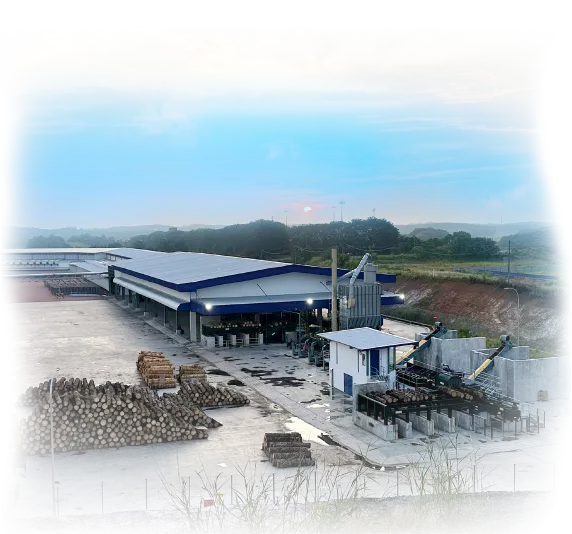
IOI Palm Wood: OnCore® Engineered Panels from Oil Palm Trunks Segamat, Johor (20-acre facility)
Stakeholders and Scope
- IOI Palm Wood and surrounding oil palm plantations across Peninsular Malaysia (raw material sourcing).
- Segamat local community (~100 local jobs, 99% Malaysian; 30% female, as at Dec 2025).
- Scope: raw material sourced from OPT generated during routine 25- to 30-year plantation replanting cycles, sourced from surrounding oil palm plantations across Johor.
Challenge(s)
- Technological constraints – Nutrient balance vs. biomass extraction.
- Moisture and energy intensity in kiln-drying.
- Biomass variability may cause processing defects.
- Building awareness of a new engineered material among potential customers and the market.
- Market acceptance: Building trust in a new engineered material.
Value Created (Impact)
- Net-negative carbon footprint: OnCore® PalmCore achieves a carbon footprint of –199 kg CO2eq/m3.
- Prevent OPT from field decomposition, avoiding ~11.2 kg CO2eq/m3 of methane emissions.
- Certification and verification: Certified ISO 9001, 14001 and 45001.
- Recognised under SIRIM Eco-Label, MyHIJAU Mark programme.
- Verified for NAF and fire-retardancy performance.
- Palm Wood vs. Timber: Shifts production from extractive logging towards agricultural upcycling, with no new land-use change.
- Boiler ash is returned to plantations as a source of soil nutrients, supporting net- negative footprint vs. conventional timber.
- Supports Malaysia’s ambition to advance bio-based green manufacturing.
IOI Mesra Grievance Management and Resolution Mechanism
Stakeholders and Scope
- Employees and workers across the Group, including plantations, mills, and IOI Headquarters (HQ).
- Offline functionality: Enables grievances to be recorded 24/7, even without internet connectivity, and automatically submitted once the connection is restored.
- Anonymity function – to ensure empowerment on the part of the complainant.
Challenge(s)
- Grievances can be complex and span through management to workers involving supervisory practices, communication gaps, working conditions, wages, harassment, safety and worker welfare.
- Recurring concerns may require timely intervention.
- Unresolved issues need to be address in a timely manner or it may escalate, become less manageable, and erode trust.
Value Created (Impact)
- 33 out of 33 grievances closed between July 2025 to June 2026, with no open cases.
- Most grievances were resolved within 2 to 4 weeks.
- Corrective actions included counselling, formal warnings, management intervention, policy reinforcement, employee awareness initiatives and enhanced monitoring.
- The actions strengthened management accountability and workplace trust across the Group.
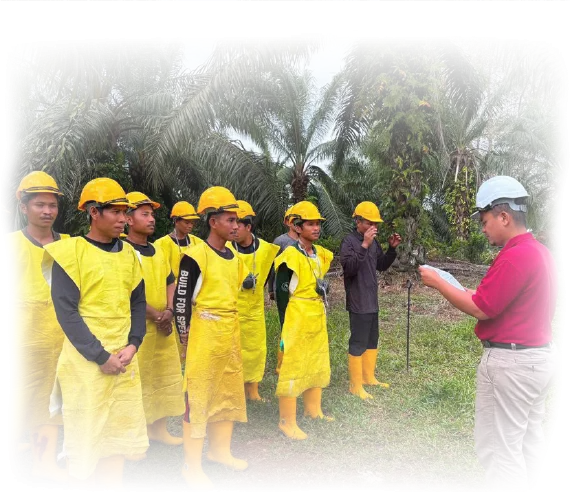
Driving Positive Socio-Economic Development*
* Part of the RM1,000,000 in community development programmes contributed by PT SNA.
Food Security Programme
Stakeholders and Scope
- Collaboration between IOI PT SNA and the Ketapang Regency Government.
- Ongoing since 2021: Air Hitam Besar Village (Kendawangan District), farmer group Kelompok Tani Sejahtera Bersama Kendawangan.
Challenge(s)
- Limited local food production capacity.
- Underutilised agricultural land.
- Land clearing through burning.
Value Created (Impact)
- 4 Ha paddy field yielding ~4 tonnes/Ha (Kelompok Tani Sejahtera Bersama, Inpari 30 variety).
- First harvest October 2024, latest sowing July 2026.
- Fires from land clearing, especially during El Nino and the dry seasons are reduced.
Strengthening Community Connectivity and School Infrastructure
Stakeholders and Scope
- Air Hitam Besar, Air Hitam Hulu, Pembedilan & Jambi Villages (Kendawangan): Sekolah Menengah Pertama Negeri 02 (“SMPN 02”) & Sekolah Dasar Negeri 04 (“SDN 04”).
Challenge(s)
- Limited village accessibility and interconnectivity.
- Inadequate drainage and infrastructure resilience.
- Deteriorating local school infrastructure.
Value Created (Impact)
- Road maintenance programme with Ketapang Regency Government, covering the access road to Pangkalan Bun and Jalan Hantak, improving regional mobility.
- Financial support extended to two local schools.
Additional Income of Local Communities (Agroforestry and Silvopasture)
Stakeholders and Scope
- Local farmer and livestock groups in Air Hitam Hulu and Pembedilan Villages, Kendawangan, Ketapang, West Kalimantan.
Challenge(s)
- Limited income sources for local communities.
- Lack of technical knowledge and resources.
- Unsustainable land use and low productivity.
Value Created (Impact)
- Approximately 13 Ha agroforestry and silvopasture demonstration plot established as a learning and replication models.
- Chicken rearing provides short-term income through regular harvest cycles, while fruit and forestry tree planting is expected to provide long-term economic and environmental benefits.
- Local communities are not dependent on a single income stream.